
How it works
From the first call to your everyday orders. While we handle it, you think about what's next.
Getting started with ShipTo
A few days to a week. The first call is about understanding your business, not selling you a package. Bring your other questions too: retailers, apps, packaging.
- A call. We get to know your business. Book a call30 minutes, no commitment
- A quote. Based on your products and volumes.
- Your store connects. We need access to your store and your product list.
- We receive your goods. An automatic notice as soon as they reach our dock, with photos if a box is damaged. Then a full PDF report: what arrived, photos if needed, and how long it took.
- Your first orders ship.
Switching 3PLs? We plan the move with you. You keep your platform.
The journey of an order
The same journey as on our home page, with three steps you rarely see: grouping, choosing the carrier, and tracking that flows back to your store.
- ORDEREDOn your store
- RECEIVEDAt our warehouse, automatically
- GROUPEDWith the day's orders
- PICKEDEvery item scanned
- PACKEDEvery item scanned again
- CARRIERBest value, under your rules
- SHIPPEDHanded to the carrier
- TRACKEDYour customer is notified
24 orders, one trip
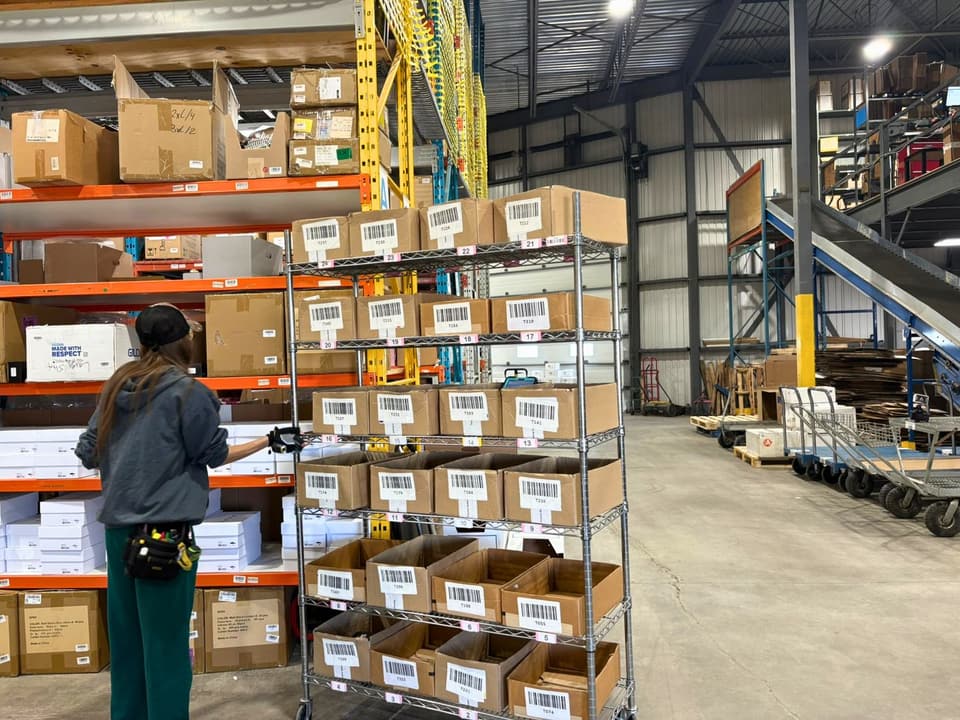
Instead of one trip per order, a picker takes 24 at a time.
- The system groups the orders and plans the best route.
- Two checks: one scan at picking, one scan at packing.
- The efficient way: a full case when it does the job.
The right carrier, automatically
You get the same rates as our largest clients. For each parcel, the carrier is chosen by your rules.
Less to remember
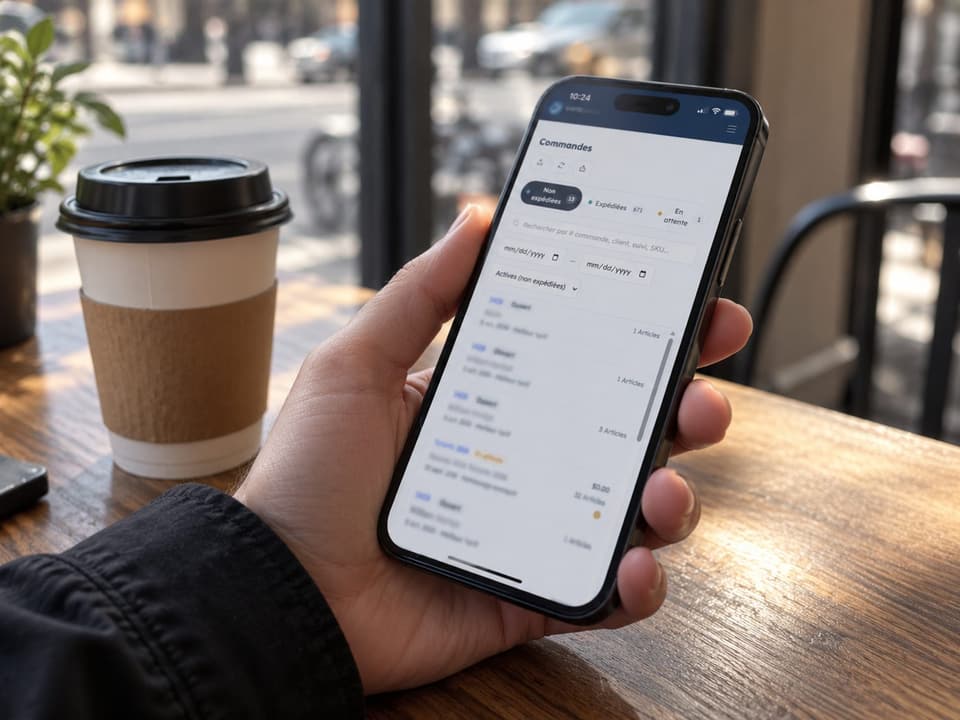
- Arivo, your client portal: orders, inventory, returns, billing.
- Replenishment calculation: your sales and each supplier's lead time, so you know what to order and when.
- Inventory analysis: what costs, what sits.
- Targeted counts on at-risk locations.
When something goes wrong
A box damaged at receiving? You get the photos automatically.
who knows your account.
We replace it, at our cost.
We file the claim. Not you.
We flag it and fix it with you.
One monthly invoice, easy to read
No setup fees. Each month, one invoice:
- Receiving
- storage
- picking and packing
- packaging materials, only what's used
- shipping
- account management fee
one invoice a month
The amounts? It's all detailed in your quote.
Frequently asked questions
Before you start
Does a 3PL cost more than doing it myself?
Less often than you'd think, once you count everything: your time, shipping at our rates, boxes paid as you use them, the space and equipment you no longer need. The full math
Do you have an order minimum?
No. And even at a small volume, you get our shipping rates. Not selling yet? Here's where to start.
Do I have to change sales platforms?
No. We connect to your store as it is.
Am I locked into a contract?
No. There's no long-term contract: you can leave whenever you want, with reasonable notice. Just not a week before Black Friday: we need time to prepare your move properly.
Can I visit the warehouse?
Yes, by appointment.
Day to day
How do my goods get to you?
In parcels or on pallets, from your supplier or from you.
Can I get part of my stock back?
Yes. A pallet of trade show material, for example: we store it and bring it out when you need it.
What about the holidays?
Let us know. We plan staff and space.
Can you help me get into a retailer?
Yes. Case packs, UPC codes, labels, delivery procedures: we've done it for other clients. If some of our clients already sell at that retailer, we can put you in touch, with their OK.
Do you handle EDI?
Not ourselves. Big chains have their own tools for EDI and ASNs; we prepare your shipments to their routing guide and help you understand what they're asking for.
The words of the trade
3PL
Third-party logistics: a company that stores your products, packs your orders and ships them for you. You keep your brand and your sales. See the before and after
SKU
Stock keeping unit: the unique code for each product and each variant (size, colour). It's what we scan.
UPC
Universal Product Code: the barcode printed on your products, the one retailers' checkouts read.
FBA and FBM
Fulfillment by Amazon: Amazon ships your orders from its warehouses, and we send your stock there. Fulfillment by Merchant: your Amazon orders ship from our warehouse.
FNSKU
Fulfillment Network SKU: Amazon's label that identifies your product in its warehouses. We put it on every unit.
EDI and ASN
Electronic Data Interchange: exchanging documents electronically with a retailer (orders, invoices). Advance Shipping Notice: the notice sent before a delivery.
B2B
Business-to-business: selling to businesses, such as retailers, rather than to consumers.
Grouped picking
A picker takes several orders in a single trip through the warehouse, each in its own bin.
Terminal
The handheld computer with a barcode scanner that the picker carries: it tells them where to go and checks every item scanned.
Targeted counts
We recount the busiest or nearly empty locations first, where mistakes are most likely to happen.